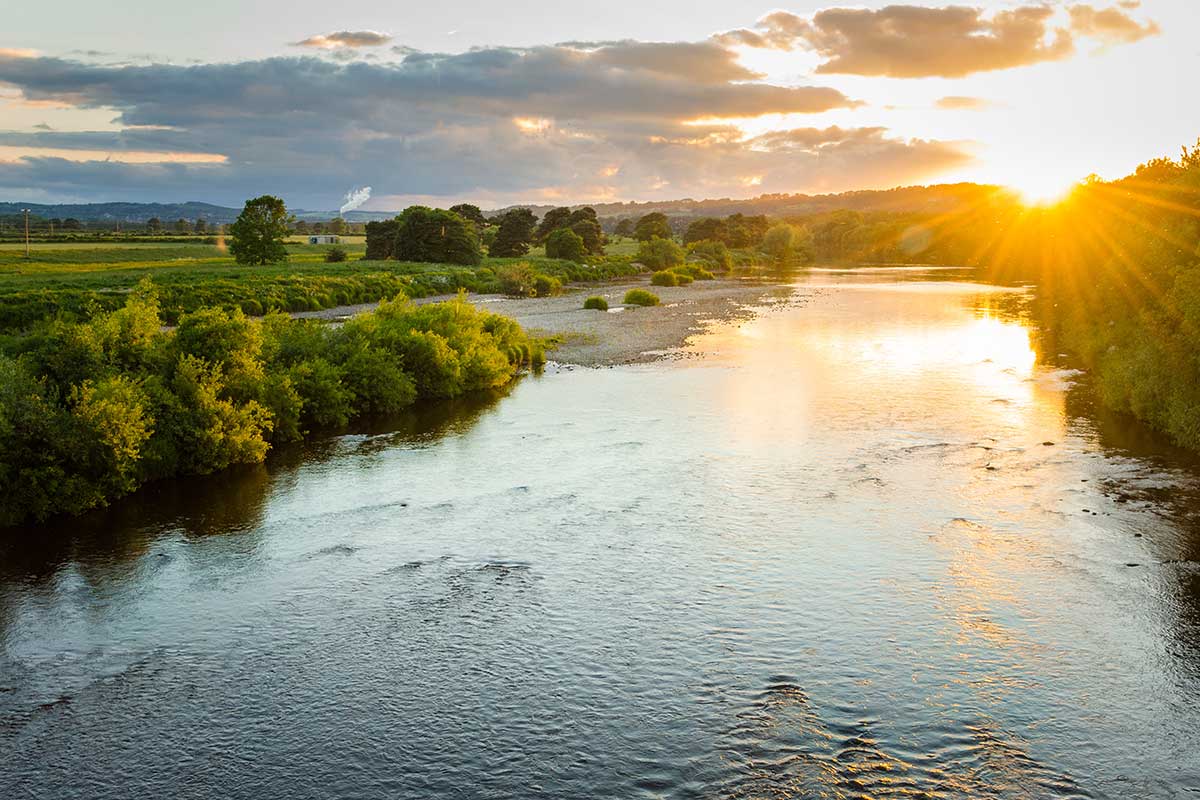
Over the past several hundred years many rivers have been progressively managed, modifying the natural functioning of the system. Common techniques have included the construction of flood embankments (which reduce floodplain connectivity); riverbank protection (which inhibit the natural movement of rivers); straightening (which greatly simplifies in-stream habitat); and creation of weirs (which can inhibit passage for migratory fish). Where appropriate, rivers can be restored and recover to a more natural state which can bring benefits for climate change resilience, water quality, biodiversity and natural flood management.
2025 Update
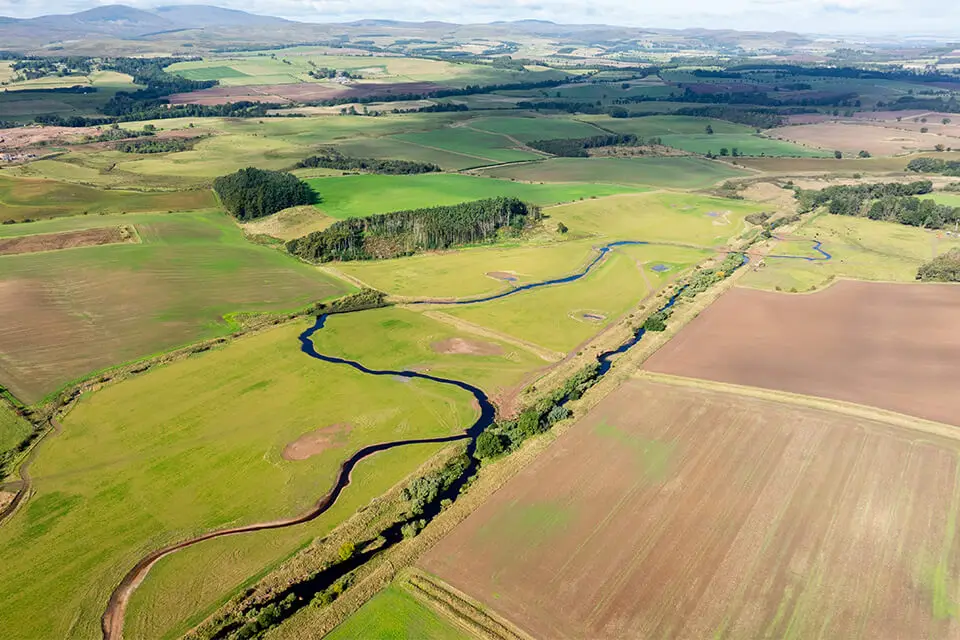
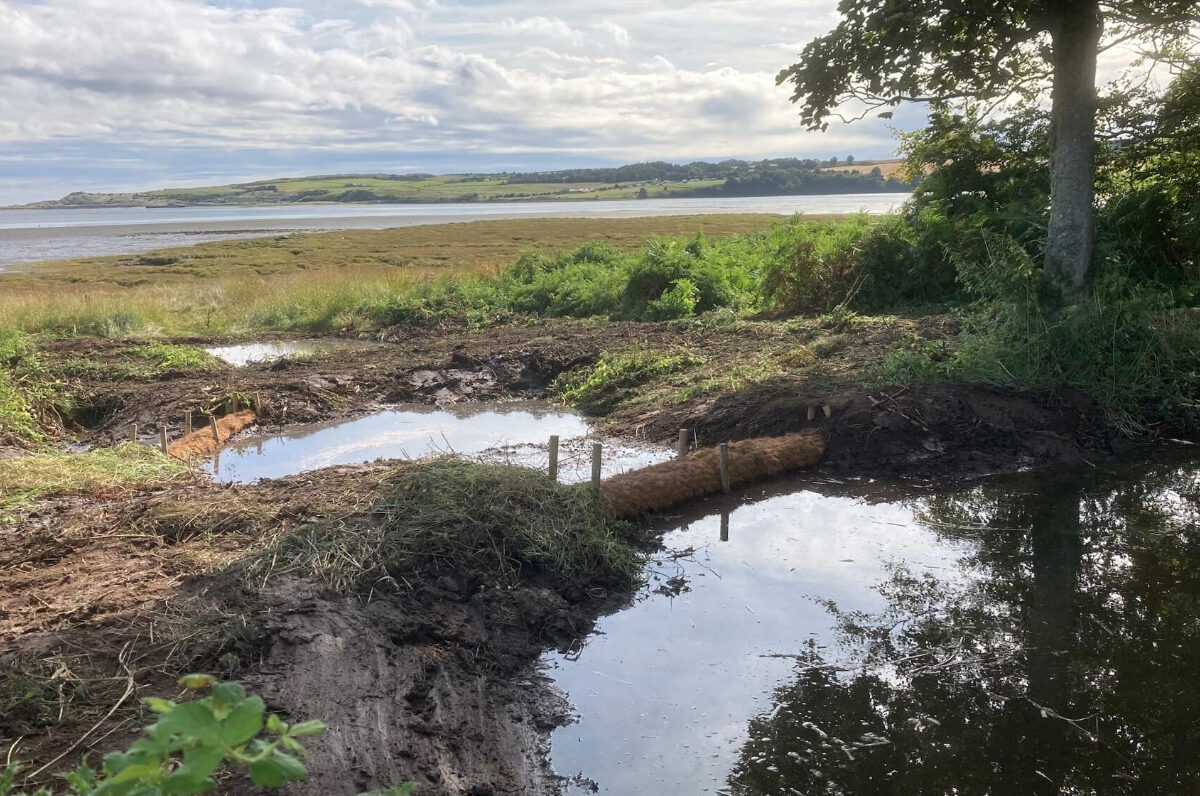
Through the LIFE WADER project, the Environment Agency and Tweed Forum working in close partnership with the landowners and contractors Aecom and Ebsford, have undertaken a significant river restoration project in the Breamish Valley, Northumberland. The river Breamish at this site had been historically straightened and modified for agricultural purposes with around a mile of natural river channel lost. Through minimal constructive intervention the river has now been reconnected to its natural floodplain creating a more natural and resilient mosaic of habitats.
The newly reinstated meandering river system is already bringing huge benefits for wildlife and ecology, with heron, kingfishers and damselflies spotted using the new habitats; water crowfoot, a rare plant central to the Till catchment’s protected status, is establishing in the new meanders, and salmon and sea trout are moving freely through the site to their upstream spawning grounds.
Partnership
Restoration at this scale is only possible with the full support of the landowners. In this case what was valuable arable land has been released to become floodplain that will also serve now as grazing pasture for livestock during drier months. This is a significant step for the landowners and not a decision taken lightly. The restoration project is a key element of the River Till Restoration Strategy and is the culmination of 12-15 years of discussion and collaboration during which time trust and confidence has built between the landowners and the delivery partners to the stage that the restoration, delivered over summer 2025, has been possible. Already this is inspiring neighbouring landowners to consider restoration options on their own land.
Watch the story unfold in our 10-minute film: A River Set Free
The Future
The restoration work carried out in 2025 is really only the start of the story, as Tweed Forum Project Manager Phil Kearney puts it “We’ve done this and then nature will shape it, will do the final finessing itself. We’ve created the rough channel and then we’ll let nature do the rest”.
The ongoing management of the floodplain and surrounding land will be carried out by the landowners with support from a 20-year Countryside Stewardship agreement. In addition, the LIFE WADER partners will continue to monitor this stretch of the river alongside the landowners to gather evidence that its goals are being achieved.
This will:
– Naturally filter the nutrient load in the watercourse – promoting biological purification processes that contribute to cleaner water.
– Increase farming resilience by dissipating flood flows and providing increased groundwater recharge during low-flows
– Create the ideal conditions for fish such as salmon and brown trout to pass through and spawn in – allowing the natural accumulation of gravel, providing shade and hiding places from predators
– Significantly increase biodiversity by restoring ecosystems and ecosystem processes e.g. habitats, natural (ground)water flows and opportunities for greater connectivity.
– Create and enhance wetland habitat and create new meadows for wildflowers and insects on the floodplain of the River Till which is a SSSI and SAC.
– Increase carbon storage
Measurement Techniques:
– Sondes – Providing live Water Quality data
– Level sensors
– TIMS – Time Integrated Mass-flux sampler to assess fluvial sediment
– Ecology – macrophytes and RHS
– Drone footage/fixed point photos
Relevant links:
River Till Restoration Strategy
Bringing a river back to life