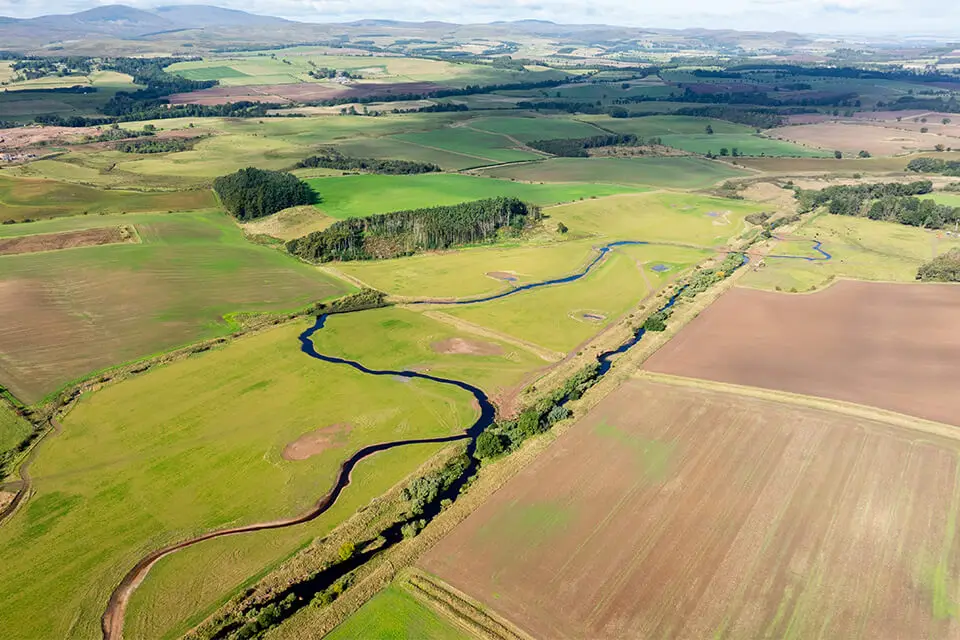
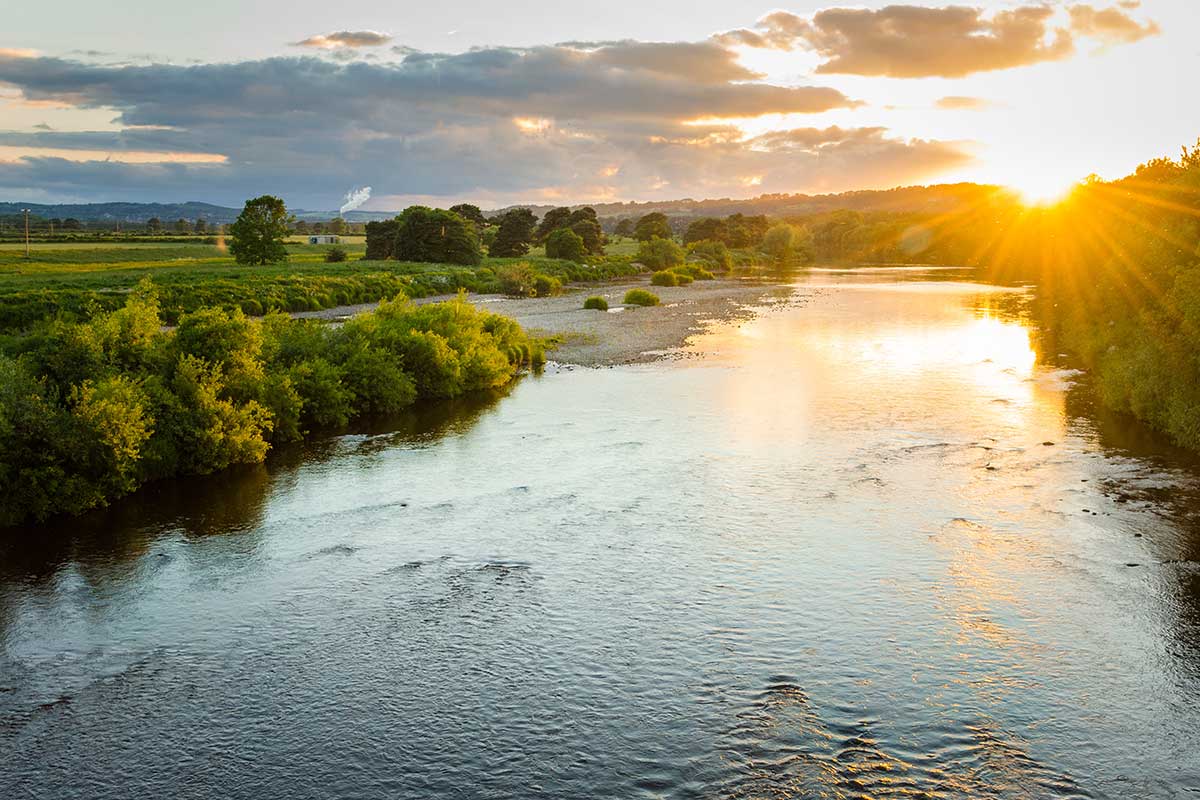
Centuries of clearing land for agriculture in the Tweed Valley has left very little remaining native tree cover. Trees are a huge asset in the landscape – not only do they sequester carbon, release oxygen and provide habitats for myriad wildlife, they also stabilise riverbanks, protect soil from erosion, reduce run-off and nitrate leaching (so improving water quality) and attenuate flooding. What’s more, tree shade performs a crucial role – balancing river water temperatures, which is crucial for key species such as salmon, trout and freshwater pearl mussels. On a socio-economic level, woodland increases desirability for recreation, better connects people with nature and provides a boost to tourism and the local economy. There are also significant gains for agri-business including shelter and shading for livestock as well as carbon insetting and regulation compliance.
The absence of trees in the upper reaches of the River Tweed has exacerbated riverbank erosion and contributed to a deterioration in water quality across the catchment. There is now an overwhelming case for restoring and expanding native riparian (riverside) tree cover in this location.
The Response
WADER’s central project aims are to improve water quality, enhance and improve ecological corridors and create a more integrated, resilient and sustainable landscape in the context of a changing climate. Appropriate reforestation is key to this – but must be targeted and at a scale large enough to have significant impact and increase connectivity across the landscape.
WADER is carrying out an ambitious 64ha riparian tree planting scheme across the Upper Tweed catchment over five years, using mixed native species. (Diverse natural woodland enhances and maintains the environment unlike commercial, single-species forestry.)
Planting new riparian woodland and expanding and protecting woodland remnants will deliver significant cost/benefit return. WADER is also constructing additional riverbank fencing to help prevent pollution caused by animals entering the river.
The scheme has multiple benefits for agri-business – the new woodlands will provide shelter, shading, and reduce poaching. Less soil erosion, better water quality, natural flood management and greater biodiversity will all significantly boost agricultural gains.
The Method
WADER is working closely with farmers and landowners at all stages of the woodland creation process – from raising awareness of the benefits to sharing expertise, mentoring and training, to identifying and securing finance and site-specific delivery. They have also produced a best-practice manual for riparian woodland creation giving step-by-step advice on everything from mapping, site-surveys and regulatory guidance to funding and managing projects in the long term.
The Result
WADER is on track to meet all planting area targets. A total of 18.41ha (26,442 trees) have already been planted as of March 2025. This includes two sites in the Leader Valley catchment and a site in the Upper Tweed. The Leader Valley has been a particular focus area for the project as it is known to have serious diffuse pollution issues and is even designated as a SEPA Diffuse Pollution Priority catchment.
A further 46.98ha of planting is set to take place in the 25/26 season. This will include two more sites in the Leader Valley – Addinston (25.79ha) and Burncastle (11.68ha), and a further site on Ettrick Water.
The Future
WADER will continue to identify more site opportunities and educate local landowners on the multiple benefits of native riverbank woodland – both through workshops and one-to-one visits.
In tandem, the team are carrying out two novel demonstration projects to help support riparian woodland creation:
-
- Solar-powered water troughs – One of the main concerns farmers raise about watercourse woodland is that livestock, who depend on rivers for drinking water, will be impeded. WADER is trialling the use of solar-powered water troughs which can operate in any remote location, pumping water at high pressure without needing access to electricity. WADER is testing two different troughs to compare longevity, ease of use, and cost-effectiveness.
- Plastic-free tree support – Tree establishment is a critical period in the creation and management of woodland, and tree guards provide protection from browsing mammals and enhance tree growth.To date, most have been made from plastics which are not biodegradable. When used in the riparian zone, plastic guards can be washed away, polluting downstream or ending up at sea as microplastics. These biodegradable guards are being tested on a 7ha area at Horncliffe, on the south bank of the Tweed.
If successful, both trials will act as live demonstration sites of best-practice.
Read Tweed Forum’s Guide for Woodland Creation here